
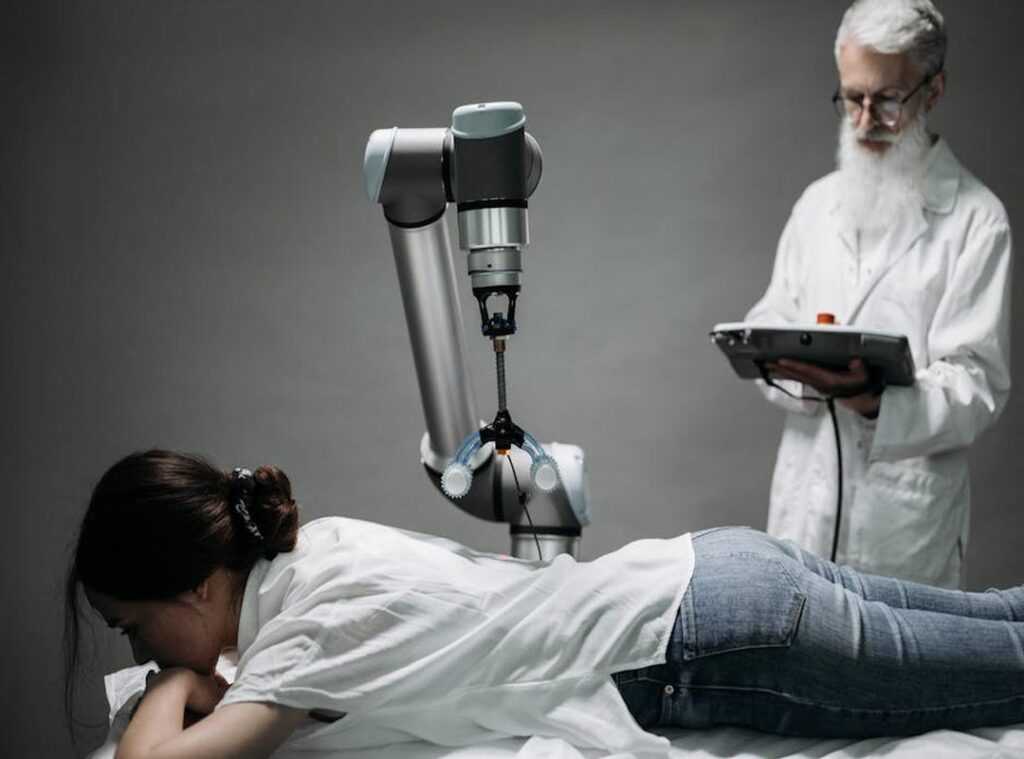
Imagine a world where surgery is performed by robots with microscopic precision and in-home care is managed by empathetic AI. Sounds like fantasy? It’s not.
We’re diving into a grounded, well-researched projection of the robotics healthcare 2045 future. The future of tech can feel overwhelming, full of hype. But let’s cut through the noise.
We focus on tracking exponential technologies, and we’ll separate credible innovation from fleeting trends. You might ask, why trust this? We’ve been a trusted voice in future tech, dissecting real breakthroughs from the fluff.
By the end, you’ll leave with a tangible understanding of how robotics will reshape your health and the medical field within the next two decades. Ready to explore this future with me? Let’s go!
The Starting Line: Healthcare Robotics Now
Ever thought about what drives the future of medicine? I’ve seen the foundation (and) it’s already fascinating. Medical robotics is changing healthcare.
Take the Da Vinci system. This surgical assistant is revolutionizing operations, making surgeons more precise, but let’s be clear: it’s not autonomous. Surgeons still guide these machines.
What about robots in logistics? They’re everywhere, dispensing meds, moving lab samples, sterilizing rooms. These aren’t science fiction.
They’re here, cutting down human error and speeding up processes. I’ve watched them in action, and it’s like seeing efficiency come to life.
Then there are exoskeletons. Ever seen someone walk after an injury and think, “Wow, that’s amazing”? Robotics is making that happen.
Patients are regaining mobility with these devices. It’s like a proof of concept for what’s possible in rehabilitation. But we’re just at the start.
Looking ahead to 2045, I see these innovations not just as tools but as the groundwork for next gen robotics collaborative machines. We’re only scratching the surface of robotics in healthcare. Imagine what’s next as we step towards 2045.
Excited yet?
The 2030s Bridge: AI and Sensor Revolution
The 2030s? It’s the dawn of something huge. We’re not just trudging toward 2045; we’re sprinting.
This decade will craft the bridge to that future we can’t stop buzzing about. It’s all about making software smarter. Sure, hardware matters, but the real game-changer?
Smarter software.
AI and machine learning are about to turn robots from mere tools into full-fledged teammates. Imagine a robot that’s not just assisting but actively learning. It draws on millions of surgical procedures and diagnostic scans.
It’s like when you binge-watch a series and suddenly get all the plot points. Only here, the stakes are way higher.
Then there’s sensor fusion. Ever tried to comprehend how those robots will see and feel? Future machines will integrate vision, touch (that’s haptics for you techies), and biosensors.
They’ll perceive the human body with superhuman detail. It’s like giving them a sixth sense, only more scientific and less Hogwarts.
What’s mind-blowing is predictive diagnostics. No more waiting for a problem to arise. These robots will predict health issues before they hit the fan.
Thanks to immense data processing capabilities, they’ll scan through data with quantum-level speed (or so they say). Imagine that (a) future where illness gets outsmarted by raw data.
Right now, this decade is about crafting those “brains” and “senses” for these futuristic robots. Forget about flashy features; it’s the outcomes that count. And the outcome?
A whole new level of robotics healthcare 2045 is on the horizon. It’s not just science fiction anymore. Check out pmc12902103 for a deep dive into some of this tech talk.
What we’re seeing is the groundwork for something beyond our current imagination. It’s not just about the tools. It’s about creating partners in machinery that are smart enough to envision a healthier future for all of us.
Your World in 2045: Robotic Healthcare Revolution
Ever imagined waking up in 2045? It’s a morning like no other, especially with a Guardian Angel Bot by your side. This little marvel isn’t just some gadget.
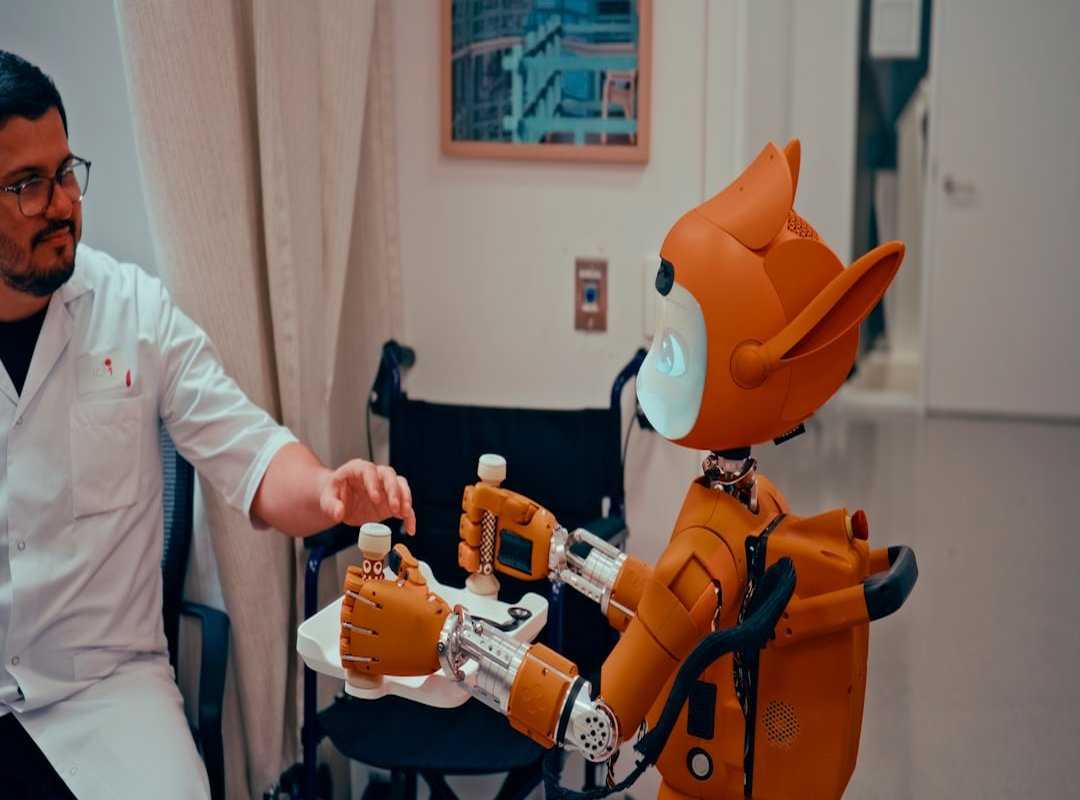
It’s your companion, ensuring you’re safe at home. Imagine it buzzing slowly by, checking your vitals without poking you with needles. It’s got your meds sorted out too.
On time, every time. If you fall, it’s on it before you even hit the ground. And forget the hassle of scheduling calls.
Need to talk to the doctor or your family? It’s all a button away. This bot doesn’t just keep you healthy.
It keeps you independent.
Now, let’s take a walk. Or rather, a ride (to) the hospital. Picture this: you’re about to undergo surgery.
But instead of a room full of humans, you see an Autonomous Surgical Team. A lead surgeon oversees, but robotic arms do the heavy lifting. One makes a precise incision, another deploys nanobots to attack cancer cells directly, and a third closes up, leaving barely a scar.
Sounds like sci-fi, right? But here’s the kicker. This tech isn’t just for big city hospitals.
It’s reaching remote areas too. Less invasive, quicker recovery. Who wouldn’t want that?
Then, there’s the street scene. An accident happens. Before human paramedics arrive, a drone or a small robotic vehicle is already there.
It’s like the Robotic First Responder is out of a movie. It assesses the situation, performs triage, and administers immediate treatment (stops) bleeding, stabilizes the injured. All this while sending data to the hospital.
Speed matters in emergencies, and every second counts.
Robotics healthcare 2045 isn’t just about flashy tech. It’s about enhancing life, making healthcare more accessible, more personal. And if you’re wondering about the broader impact of tech, imagine its role in ai education transforming learning environments.
The future isn’t just coming. It’s here, molding every facet of our lives. Healthcare, education, you name it.
By 2045, we might be living healthier and smarter lives than we ever thought possible.
The Human Touch: Redefining Doctors and Nurses
Will robots replace healthcare professionals? Short answer: no. They won’t replace, they’ll augment.
Imagine doctors as “mission controllers,” orchestrating complex surgeries with fleets of diagnostic bots. They won’t just automate. They’ll save lives through keen interpretation of AI-driven data and focus on the tough stuff.
And nurses? They’ll evolve too. With robots doing the physical lifting and handling meds, nurses will have more time for empathy and support.
They’ll educate patients, coordinate complex care, and provide the emotional grounding that robotics simply can’t deliver.
Does this mean humans become obsolete? Not a chance. It means technology takes on the grunt work, freeing us to be even more human in our care.
In robotics healthcare 2045, professionals will connect with patients on a deeper level, not less. It’s a win-win. The care becomes personalized.
We get the emotional aspects. Robots handle the heavy-duty tasks.
The focus is on humans being human. And isn’t that what medicine should be about anyway? Freeing humans to provide real, compassionate care.
Tomorrow’s Health Starts Now
Today’s strides in AI, sensors, and robotics are just the beginning. We’re not dreaming of a distant future; robotics healthcare 2045 is taking shape now. The hype is gone.
Replaced by a clear, human-focused vision. Are you ready for this change? Staying informed is key.
Understanding this trajectory is how we’ll get through personal and public health tomorrow. It’s not just about looking forward; it’s about seeing what’s happening right in front of us. Dive deeper into these innovations.
Keep your finger on the pulse. Visit dowsstrike2045.net, stay ahead of the curve, and embrace the future.
 Quantum Computing & Future Tech Researcher
There is a specific skill involved in explaining something clearly — one that is completely separate from actually knowing the subject. Jesus Stormeraindear has both. They has spent years working with tech maintenance tutorials in a hands-on capacity, and an equal amount of time figuring out how to translate that experience into writing that people with different backgrounds can actually absorb and use.
Jesus tends to approach complex subjects — Tech Maintenance Tutorials, Knowledge Vault, Strike-Driven Quantum Computing being good examples — by starting with what the reader already knows, then building outward from there rather than dropping them in the deep end. It sounds like a small thing. In practice it makes a significant difference in whether someone finishes the article or abandons it halfway through. They is also good at knowing when to stop — a surprisingly underrated skill. Some writers bury useful information under so many caveats and qualifications that the point disappears. Jesus knows where the point is and gets there without too many detours.
The practical effect of all this is that people who read Jesus's work tend to come away actually capable of doing something with it. Not just vaguely informed — actually capable. For a writer working in tech maintenance tutorials, that is probably the best possible outcome, and it's the standard Jesus holds they's own work to.