
We’re hitting a wall, aren’t we? Classical computing has done wonders, but it’s struggling. Those pesky limits of physics are catching up.
Medicine, climate, finance (our) toughest challenges laugh at our silicon chips. It’s not that progress has stalled. It’s that our current tech is like trying to dig to China with a spoon.
Enter quantum computing. I’ve pored over tech roadmaps and lab breakthroughs, and believe me, the shift is seismic.
You want a no-nonsense guide to quantum computing applications, right? Good. That’s what I’m giving you.
By the end, you’ll see how this isn’t just sci-fi fluff. It’s reshaping industries right now. Quantum isn’t the future; it’s the emerging present.
Let’s decode this revolution, hype-free, and see where our world is truly headed.
The Quantum Leap: Why Qubits Change Everything
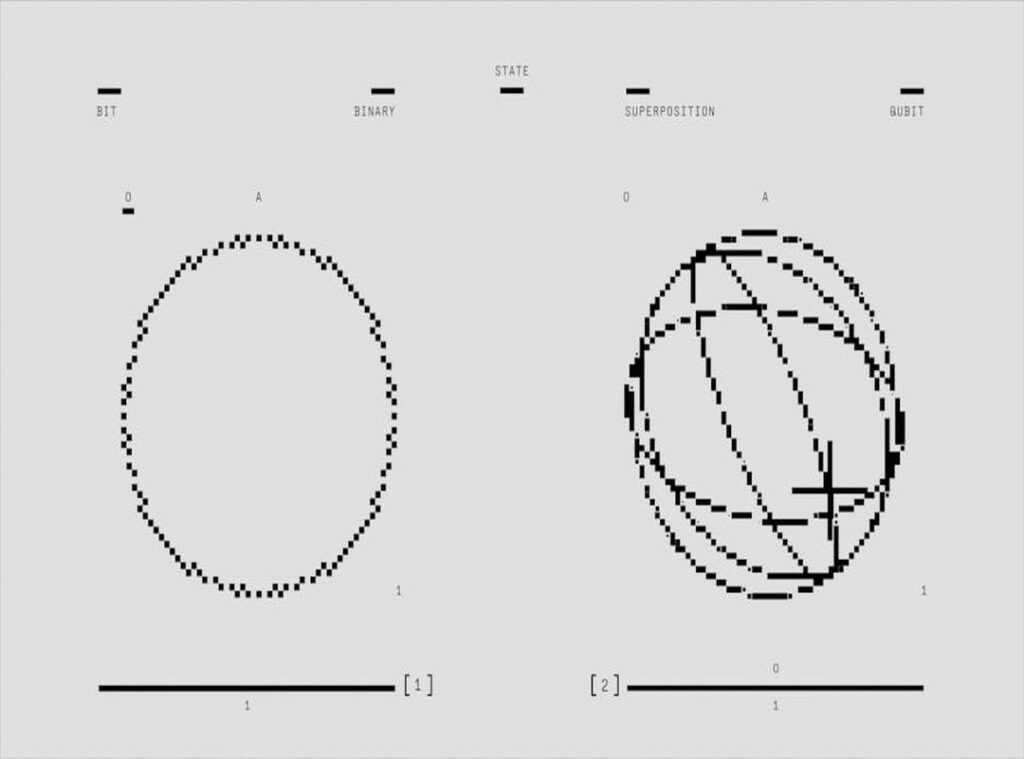
Classical bits are like simple on/off switches. They’re either a 1 or a 0. That’s it.
But enter the qubit, and we’re in a different universe. Imagine a dimmer switch instead of a light switch. It can be on, off, or anywhere in between.
Or picture a spinning coin: heads, tails, and everything in between at the same time. This is superposition. Intrigued yet?
Now, let’s talk about entanglement. Think of it like a pair of linked particles. Measure one, and you instantly affect the other, no matter how far apart they are.
It’s spooky action at a distance (Einstein’s words, not mine). This means quantum computers can process massive amounts of data simultaneously.
Here’s the kicker: this isn’t about sending emails faster or making your Netflix stream smoother. It’s about tackling complex simulations and optimizations that classical computers can’t handle. We’re talking about problems like drug discovery and climate modeling.
These principles make quantum computing applications not just possible but inevitable. The potential here is enormous. Want to dive deeper into how this tech can revolutionize data encryption?
You might want to read more.
So, are we ready for this quantum future? It’s not a question of if but when. The leap has already started.
Engineering a Healthier, Stronger World
You know how they say quantum computers are just hype? They’re wrong. In medicine, these machines can simulate molecular interactions with perfect accuracy.
Classical supercomputers? Not even close. Imagine designing a new enzyme to break down plastics.
Or crafting a personalized cancer drug based on your unique genetic makeup. These aren’t sci-fi dreams; they’re quantum computing applications in action.
What about materials science? This is where things get wild. Picture creating room-temperature superconductors for energy grids that lose nothing (yes, zero energy loss).
Or ultra-strong, lightweight alloys for deep-space exploration. Designing materials at the atomic level is the future. Can’t you just see spaceships gliding effortlessly through the cosmos?
So why does any of this matter? Because it’s not just about stronger, healthier worlds. It’s about survival.
It’s about pushing boundaries in ways we couldn’t before. Quantum computing is the key. Skeptical about its real-world impact?
Don’t be. It’s time we embraced this tech revolution and what it can do.
We need to ask ourselves: What else can we achieve with quantum computing applications? The potential is limitless, and soon, it’ll be our reality.
Quantum Reshuffle: Finance and Security Reimagined
Let’s face it. The quantum threat is real, and it’s coming faster than we think. Algorithms like Shor’s will tear through today’s encryption like tissue paper.
What does that mean? Global banking, government data, and even your precious cryptocurrency could be at risk. Scary, right?
But there’s hope. Enter Post-Quantum Cryptography (PQC) and Quantum Key Distribution (QKD). These aren’t just buzzwords (they’re) our next-gen shields.
With quantum computing applications, we can secure data in ways that were once science fiction. And if you’re still not convinced, think about this: finance can become a whole new game. Quantum systems can run hyper-complex financial models and risk assessments.
Imagine using Monte Carlo simulations to predict market behavior with accuracy that leaves traditional methods in the dust.
In this brave new world of finance, strike protocols boosting quantum security will be important. It’s not just about keeping data safe. It’s about staying ahead of the curve.
Does this sound like a sci-fi movie? Maybe. But it’s rapidly becoming tomorrow’s reality.
Are we ready for it? That’s a question worth pondering.
Supercharging AI and Global Optimization: Quantum’s Role
Ever felt the frustration when you’re stuck in traffic and wonder why we can’t just fix every route on the planet? quantum computing applications step in. Imagine optimizing routes for every plane and cargo ship simultaneously. We’re talking about massive emission cuts and cost savings.

It’s like playing 4D chess with the global logistics board.
Quantum Machine Learning (QML) holds the key to solving these colossal optimization problems. Traditional computers choke on them. But QML?
It thrives. It can manage and process vast amounts of data that make today’s systems look like toys. By training more fast AI models, we’re on the verge of breakthroughs in autonomous systems and complex data analysis.
Who doesn’t want self-driving cars that actually know what they’re doing?
Picture a future where quantum-powered AI runs our smart cities but also predicts natural disasters with eerie accuracy. Supply chains could react in real-time. You might laugh, but this is closer than you think.
For a deeper dive, check out this in-depth look.
The future of AI isn’t just about making things smarter. It’s about making them better for everyone. And that’s a future I can get behind.
The Quantum Revolution: Precision and Possibility
Quantum sensing is poised to redefine precision in our world. It’s a big deal. By exploiting the delicacy of quantum states (kind of like trying to balance on a single grain of sand), we craft sensors of extraordinary precision.
Imagine medical scanners that can detect a single neuron firing. That’s not sci-fi. It’s on the horizon.
Or think about gravitational sensors that map underground resources from miles above. Mind-blowing, right?
But why stop at sensing? Large-scale quantum simulation is another frontier. This tech allows us to model the most detailed systems with accuracy we’ve only dreamed of.
Picture simulating Earth’s climate down to every last detail. Testing geoengineering solutions becomes child’s play. Or how about simulating the Big Bang itself?
We might finally decipher the universe’s mysteries. These quantum computing applications are more than just breakthroughs. They’re the keys to new worlds.
You might ask, where’s the catch? Quantum tech isn’t mainstream yet. But with every step, we’re inching closer.
It’s like standing on the edge of something vast and staring into endless possibilities. Are you ready for this future? I am.
Quantum is no longer just a buzzword. It’s the next frontier.
Embrace the Quantum Leap
We’ve hit a wall. Our problems are bigger than our computers. But with quantum computing applications, we’re ready to tackle that complexity head-on.
You’ve got the roadmap now. You know where this tech is headed and how it can reshape our world. This isn’t just talk.
It’s the future, and it’s solid.
So, stay in the loop. Keep an eye on the innovators driving this forward. They’re the ones who will shape the next century.
Don’t wait. Dive deeper. Visit dowsstrike2045.net to stay updated and be part of the revolution.
The future of computing starts with you.
 Senior AI & Robotics Analyst
Drusilla Mahoneyanie writes the kind of ai and robotics developments content that people actually send to each other. Not because it's flashy or controversial, but because it's the sort of thing where you read it and immediately think of three people who need to see it. Drusilla has a talent for identifying the questions that a lot of people have but haven't quite figured out how to articulate yet — and then answering them properly.
They covers a lot of ground: AI and Robotics Developments, Strike-Driven Quantum Computing, Innovation Alerts, and plenty of adjacent territory that doesn't always get treated with the same seriousness. The consistency across all of it is a certain kind of respect for the reader. Drusilla doesn't assume people are stupid, and they doesn't assume they know everything either. They writes for someone who is genuinely trying to figure something out — because that's usually who's actually reading. That assumption shapes everything from how they structures an explanation to how much background they includes before getting to the point.
Beyond the practical stuff, there's something in Drusilla's writing that reflects a real investment in the subject — not performed enthusiasm, but the kind of sustained interest that produces insight over time. They has been paying attention to ai and robotics developments long enough that they notices things a more casual observer would miss. That depth shows up in the work in ways that are hard to fake.
Senior AI & Robotics Analyst
Drusilla Mahoneyanie writes the kind of ai and robotics developments content that people actually send to each other. Not because it's flashy or controversial, but because it's the sort of thing where you read it and immediately think of three people who need to see it. Drusilla has a talent for identifying the questions that a lot of people have but haven't quite figured out how to articulate yet — and then answering them properly.
They covers a lot of ground: AI and Robotics Developments, Strike-Driven Quantum Computing, Innovation Alerts, and plenty of adjacent territory that doesn't always get treated with the same seriousness. The consistency across all of it is a certain kind of respect for the reader. Drusilla doesn't assume people are stupid, and they doesn't assume they know everything either. They writes for someone who is genuinely trying to figure something out — because that's usually who's actually reading. That assumption shapes everything from how they structures an explanation to how much background they includes before getting to the point.
Beyond the practical stuff, there's something in Drusilla's writing that reflects a real investment in the subject — not performed enthusiasm, but the kind of sustained interest that produces insight over time. They has been paying attention to ai and robotics developments long enough that they notices things a more casual observer would miss. That depth shows up in the work in ways that are hard to fake.