We’ve all heard about the “metaverse,” right? It’s been the tech buzzword for a while, but now that the hype has cooled, the real work begins. This is a good thing.
Why? Because now we’re getting past the marketing noise and into genuine innovation. It’s tough to cut through the chatter and know what’s real and new.
I’m here to guide you through it.
I’ve been following these tech developments for years. Not just the flashy consumer stuff, but the engineering and science that drives the virtual reality future. You’ll find a clear, hype-free guide here.
We’ll dive into the tech that’s shaping our future, beyond just gaming. Trust me, the advancements are significant, and they matter in ways you might not expect. Ready to explore?
Let’s get started.
Beyond Sight and Sound: The Future of Feeling
Virtual reality is evolving, and it’s not just about what you see or hear anymore. We’re stepping into a world where you can feel the digital environment around you. Remember the first time you felt a controller rumble?
That’s old news now. We’re talking about full-body haptic suits like Teslasuit and bHaptics that let you experience pressure, impact, and texture. Imagine feeling a virtual breeze or the tension of pulling a bowstring.
Crazy, right?
But there’s more. Ultrasonic haptics use sound waves to create tactile sensations in mid-air. No suit required.
It’s like getting a touch without being touched. Then there’s olfactory technology (smell) generators for VR. Ever thought about smelling the flowers in a virtual garden?
This tech is opening up a whole new dimension.
This isn’t just for gaming junkies. Realistic touch feedback is revolutionizing fields like surgical training, where precision matters. Imagine a surgeon practicing on a virtual patient with lifelike feedback.
Or remote repairs where the technician can feel the components they’re working on. Even digital design can benefit. It’s a virtual reality future, and it’s coming fast.
Curious about how biotech influences our daily lives? Check out the evolution of biotech everyday life. This stuff is happening, and it’s going to change everything.
AI as the Architect: Crafting the Future of Virtual Worlds
Creating virtual worlds is a painstaking process. Manually building these vast environments? It’s a major bottleneck.
Generative AI steps in like a superhero swooping in to save the day. I mean, imagine AI generating 3D assets, textures, and even whole landscapes from a simple text prompt (like NVIDIA’s GET3D). It’s not sci-fi anymore (it’s) happening now.
Have you ever thought about NPCs, the non-player characters in games? AI is blowing them wide open with large language models. Suddenly, these virtual beings can hold unscripted, changing conversations.
It’s uncanny. NPCs aren’t just code anymore; they feel alive. This is what the future of interaction looks like.
For users, it changes everything. Imagine a world that’s not static but adapts to your every move (tailor-made) for you. The more you interact, the more complex and personal the world becomes.
How thrilling is that?
The virtual reality future won’t just be a bigger sandbox. It’ll be a whole new area of experiences, constantly evolving. So, are we ready to dive in?
This tech isn’t just changing games. It’s changing our entire digital existence.
Breaking Free: The Wireless Revolution
Cables. They’re everywhere, right? Like vines tethering us to our desks.
But not anymore. Not in the virtual reality future we’re stepping into. Gone are the days when your fancy headset felt like it was on a short leash.
Now, wireless streaming tech is the game changer. Thanks to Wi-Fi 6E and the upcoming Wi-Fi 7, we can stream high-fidelity graphics to our headsets without that annoying lag. It’s liberating, to say the least.
But hold on, there’s more. Enter edge computing and 5G. Two powerhouses that allow processing to be offloaded to nearby cloud servers.
This means you can run complex simulations on lightweight, mobile headsets. Sounds wild? Think of it like streaming a 4K movie instead of downloading it first.
For interactive, 3D worlds, this is everything.
And guess what? This leads us to Quantum Internet Global Connectivity. It’s all interconnected (pun intended).
This is the new era of truly mobile, high-end immersive experiences.
Are you excited? Because I am. Finally, we’re cutting the cord.
Embracing wireless freedom. We’re on the brink of a tech revolution, and I’m all in. How about you?
The World is the New Screen: Augmented Reality to Spatial
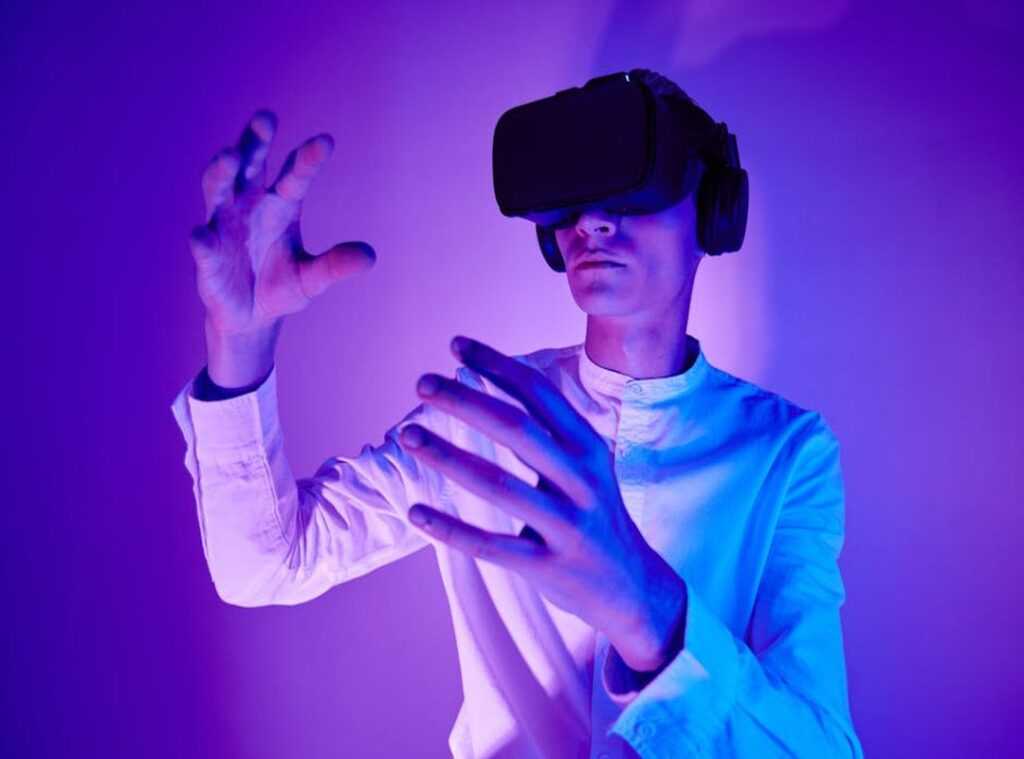
Forget virtual reality headsets that isolate you from the world. The virtual reality future is about integrating the digital with the physical. Enter Spatial Computing, the next evolution of augmented reality (AR).
AR is cool, sure (it) overlays digital info on the real world. But Spatial Computing takes it up a notch. It understands your environment, allowing digital objects to interact with it.
Imagine a virtual ball bouncing off your real table, hiding behind a real chair. That’s not just magic; it’s technology.
You know, like how self-driving cars see the road. Then there’s SLAM (Simultaneous Localization and Mapping) technology. It helps devices understand their position in 3D space.
How do we get there? Advanced sensor suites like LiDAR are key. They create real-time 3D maps of your surroundings.
And let’s not forget eye and hand tracking. These allow smooth interaction without clunky controllers.
Take the Apple Vision Pro. Not a product review, just a proof-of-concept. It shows us how apps can break free from screens.
Apps floating in your living room? That’s the new normal. So, are we ready for this digital-physical convergence?
I think we’re already living it.
The Real-World Impact: Immersive Tech’s Game-Changer
Immersive tech is shaping industries. Ever heard of AR in manufacturing? It’s not just about fancy gadgets.
Picture this: complex assembly instructions overlaid right on the equipment. It’s a game-changer. Suddenly, errors plummet, and efficiency skyrockets.
Then there’s healthcare. VR isn’t just for gaming nerds anymore. Surgeons can plan operations, performing virtual dry runs before the real deal.
It’s about saving lives, not just about fun. And for patients, virtual therapy offers a world where they can practice overcoming phobias or physical limitations. Who would’ve thought pixels could heal?
Architecture and engineering? Step aside, blueprints. How about walking through a full-scale holographic model of your next skyscraper before one brick is laid?
Catching design flaws early (before) it costs a fortune to fix (is) useful. We’re talking about fewer delays and less waste. You see, these aren’t just cool toys.
They’re big tools driving investment in tech.
What’s next? Keep an eye on the virtual reality future. These professional applications aren’t just reshaping industries.
They’re setting the stage for new possibilities we can’t even imagine yet. The core technology developed here will trickle down, impacting everyday users. It’s a wild ride we’re on, and it’s just getting started.
Step into the Future with Confidence
You’ve got the tools to see past the hype. Immersive tech isn’t about shiny gadgets. It’s about real change in how we interact.
Sensory feedback, AI world-building, and spatial computing. These are the pillars. They redefine our work, our communication, our data.
Ever thought about how this virtual reality future could reshape your industry? It’s not just theory. It’s happening.
Don’t wait. Explore these advancements now. Imagine their impact in 3-5 years.
Want to stay ahead? Start integrating these technologies. They’re not just trends.
They’re the future. Be proactive. Dive in, and don’t get left behind.
 Quantum Computing & Future Tech Researcher
There is a specific skill involved in explaining something clearly — one that is completely separate from actually knowing the subject. Jesus Stormeraindear has both. They has spent years working with tech maintenance tutorials in a hands-on capacity, and an equal amount of time figuring out how to translate that experience into writing that people with different backgrounds can actually absorb and use.
Jesus tends to approach complex subjects — Tech Maintenance Tutorials, Knowledge Vault, Strike-Driven Quantum Computing being good examples — by starting with what the reader already knows, then building outward from there rather than dropping them in the deep end. It sounds like a small thing. In practice it makes a significant difference in whether someone finishes the article or abandons it halfway through. They is also good at knowing when to stop — a surprisingly underrated skill. Some writers bury useful information under so many caveats and qualifications that the point disappears. Jesus knows where the point is and gets there without too many detours.
The practical effect of all this is that people who read Jesus's work tend to come away actually capable of doing something with it. Not just vaguely informed — actually capable. For a writer working in tech maintenance tutorials, that is probably the best possible outcome, and it's the standard Jesus holds they's own work to.
Quantum Computing & Future Tech Researcher
There is a specific skill involved in explaining something clearly — one that is completely separate from actually knowing the subject. Jesus Stormeraindear has both. They has spent years working with tech maintenance tutorials in a hands-on capacity, and an equal amount of time figuring out how to translate that experience into writing that people with different backgrounds can actually absorb and use.
Jesus tends to approach complex subjects — Tech Maintenance Tutorials, Knowledge Vault, Strike-Driven Quantum Computing being good examples — by starting with what the reader already knows, then building outward from there rather than dropping them in the deep end. It sounds like a small thing. In practice it makes a significant difference in whether someone finishes the article or abandons it halfway through. They is also good at knowing when to stop — a surprisingly underrated skill. Some writers bury useful information under so many caveats and qualifications that the point disappears. Jesus knows where the point is and gets there without too many detours.
The practical effect of all this is that people who read Jesus's work tend to come away actually capable of doing something with it. Not just vaguely informed — actually capable. For a writer working in tech maintenance tutorials, that is probably the best possible outcome, and it's the standard Jesus holds they's own work to.