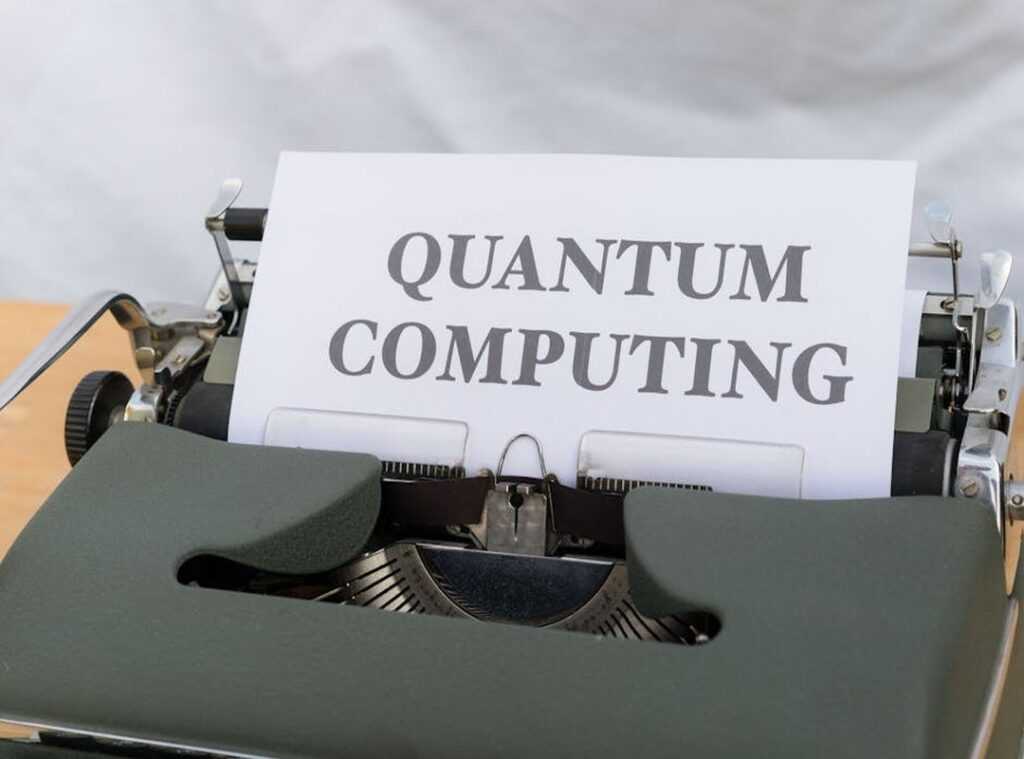
Quantum computing. It sounds like something out of a sci-fi movie, right? You picture a distant future, not something shaping up in labs today.
But here’s the thing: it’s happening. That’s what this article is about. We’re diving into the quantum computing history and showing you how it shifted from wild theories scribbled on blackboards to a tool wielded by today’s innovators.
Why should you care? Simple. This isn’t just another tech trend; it’s a transformation.
We know tech shifts can be confusing (all that jargon). Our goal? Break it down so you get the story without the headache.
We’ve tracked these innovations, and by the end, you’ll grasp not just the timeline, but why it all matters for tomorrow.
The Spark: A New Dawn in Computing
I’ve always found classical computers fascinating, but let’s be honest (they’re) limited. Think of them as a light switch: on or off, 1 or 0. That’s how they process information.
But what if we need something more complex? Something that can handle the chaos of the universe? Enter quantum computing.
It flips the script.
The core idea? The qubit. Imagine a spinning coin.
It’s both heads and tails at the same time until it lands. That’s superposition for you. Now, I know what you’re thinking.
How does that even work? Well, it’s the magic of quantum mechanics.
And then there’s entanglement. Picture two coins, far apart but connected. Flip one, and the other instantly follows suit.
Visionaries like Richard Feynman and David Deutsch dared to ask the big questions. They wondered, “What if we built a computer that works like the universe itself?” Their ideas were game-changing, laying the groundwork for what we now call quantum computing history.
Einstein called it “spooky action at a distance.” Pretty wild, right? These early concepts were purely theoretical. No machines.
Just mind-bending ideas.
Now, we’re only scratching the surface of what’s possible. Quantum computing isn’t just a tech buzzword. It’s a paradigm shift.
Curious about how this ties into other tech advances? Check out exploring new age renewable energy. It’s all interconnected.
In the end, it’s about breaking barriers and thinking differently. Who wouldn’t want to be a part of that revolution?
Building the Impossible: Quantum’s First Clunky Machines
Back in the 1990s and early 2000s, we saw the transition from theory to actual, physical attempts at quantum computing. This was the “garage startup” phase of quantum. Picture it: engineers huddled in makeshift labs, trying to make sense of fragile qubits.
These weren’t just fragile. They were downright shy. Even the tiniest vibration or temperature change could mess up calculations.
It felt like trying to balance a spinning coin on its edge; one wrong move and the magic was gone.
This fragile state is known as “decoherence.” It’s the moment the spinning coin stops, and well, the quantum magic disappears. That’s what these early pioneers were up against. They weren’t building supercomputers.
They were the baby steps of a giant leap.
They were creating something like the Wright brothers’ first flight. Sure, it didn’t soar far, but it proved flight was possible. These small-scale processors, with just 2-7 qubits, were key proofs-of-concept.
There were different approaches to building these qubits. Some looked at trapped ions, others at superconducting circuits. I’m not getting into the technical weeds here, but it’s important to know there were multiple paths being explored.
People were experimenting left and right, trying to find what worked.
The challenges were immense, but so were the rewards. Think about it: this was the beginning of quantum computing history. These early machines might have been clunky, but they laid the groundwork for what would come next.
They showed us that the impossible might just be possible. Now, that’s something worth pondering.
The Quantum Race: A New Frontier
Quantum computing history is packed with intrigue and fierce competition. Tech giants like Google, IBM, and Microsoft are battling it out, alongside nimble startups, each striving for quantum supremacy. Now, what’s this ‘quantum supremacy’ all about?

It’s the point where a quantum computer solves a problem so complex that even the best supercomputers would take thousands of years to crack it. Google’s Sycamore processor made headlines in 2019 for supposedly achieving this. But was it really a definitive moment?
Some experts debate its significance, arguing it was more of a flashy demonstration than a true leap forward.
Today, we’re in the Noisy Intermediate-Scale Quantum (NISQ) era. These machines are solid, yet imperfect. They’re “noisy” because they make errors.
Think of them as temperamental geniuses. Brilliant but unpredictable. They’re not ready for running your everyday software yet.
Instead, they’re best suited for specific research problems. Researchers focus on increasing qubit counts while also improving their quality and stability. It’s a balancing act, really.
More qubits don’t automatically mean better performance if they can’t work together smoothly.
So, why all the fuss? The potential impact on fields like cryptography, materials science, and big data is enormous. Speaking of big data, if you’re curious about its role in modern societies, check out the role big data modern societies for more takeaways.
Are we on the brink of a quantum revolution, or is it just hype? Only time will tell. Meanwhile, the race continues.
And with the stakes this high, you can bet that every player is pushing their limits. The quantum future is uncertain, but undeniably exciting.
The Next Leap: Quantum’s Future Unveiled
We’re standing on the brink of a new era in quantum computing. Right now, we’re stuck in the noisy intermediate-scale quantum (NISQ) phase. It’s a bit like having a TV that’s still black and white when everyone wants color.
What we’re aiming for are fault-tolerant quantum computers. Picture systems that can detect and fix errors on their own. No babysitting required.
Fault tolerance is key because quantum computers are infamously finicky. They mess up easily. Imagine your phone randomly deleting apps.
Unthinkable, right? In quantum terms, it’s just another Tuesday. But here’s where it gets exciting.
These computers could revolutionize medicine by designing new drugs, molecule by molecule. Materials science could see new types of batteries or solar panels. And finance?
Optimizing investment strategies becomes a game-changer.
Now, let’s wade into the futuristic stuff. Think about more stable qubits. The holy grail, right?
Some scientists are tinkering with using precise energy applications to control quantum states without causing decoherence. Sounds like sci-fi, but it’s real. We’re shifting from just research to hardcore engineering and application.
This phase is where we move into actual usable tech. A bit of a leap from the “quantum computing history” we’ve had so far, isn’t it?
And that’s the narrative. From abstract ideas to concrete realities. It’s a thrilling time to be in tech, and the future looks promising.
Quantum Computing: The Future Unfolds
Ever thought about how far we’ve come in quantum computing history? From abstract musings to a full-blown tech race, it’s wild. The challenge?
Wrangling quantum mechanics. It’s a beast, but after decades of constant innovation, we’re getting there. This isn’t just about looking back; it’s about seeing where we’re headed.
Want to stay ahead of the curve? Keep an eye on these developments. Don’t miss out.
Embrace the future as it unfolds. For the curious and the bold, understanding today shapes tomorrow. Dive in and explore.
Stay informed to stay relevant. This journey is just beginning.
 Founder & Chief Innovation Officer
There is a specific skill involved in explaining something clearly — one that is completely separate from actually knowing the subject. Thryssa Druvina has both. They has spent years working with innovation alerts in a hands-on capacity, and an equal amount of time figuring out how to translate that experience into writing that people with different backgrounds can actually absorb and use.
Thryssa tends to approach complex subjects — Innovation Alerts, Futuristic Tech Concepts, Tech Maintenance Tutorials being good examples — by starting with what the reader already knows, then building outward from there rather than dropping them in the deep end. It sounds like a small thing. In practice it makes a significant difference in whether someone finishes the article or abandons it halfway through. They is also good at knowing when to stop — a surprisingly underrated skill. Some writers bury useful information under so many caveats and qualifications that the point disappears. Thryssa knows where the point is and gets there without too many detours.
The practical effect of all this is that people who read Thryssa's work tend to come away actually capable of doing something with it. Not just vaguely informed — actually capable. For a writer working in innovation alerts, that is probably the best possible outcome, and it's the standard Thryssa holds they's own work to.
Founder & Chief Innovation Officer
There is a specific skill involved in explaining something clearly — one that is completely separate from actually knowing the subject. Thryssa Druvina has both. They has spent years working with innovation alerts in a hands-on capacity, and an equal amount of time figuring out how to translate that experience into writing that people with different backgrounds can actually absorb and use.
Thryssa tends to approach complex subjects — Innovation Alerts, Futuristic Tech Concepts, Tech Maintenance Tutorials being good examples — by starting with what the reader already knows, then building outward from there rather than dropping them in the deep end. It sounds like a small thing. In practice it makes a significant difference in whether someone finishes the article or abandons it halfway through. They is also good at knowing when to stop — a surprisingly underrated skill. Some writers bury useful information under so many caveats and qualifications that the point disappears. Thryssa knows where the point is and gets there without too many detours.
The practical effect of all this is that people who read Thryssa's work tend to come away actually capable of doing something with it. Not just vaguely informed — actually capable. For a writer working in innovation alerts, that is probably the best possible outcome, and it's the standard Thryssa holds they's own work to.