Technology is moving at a pace that makes even last year’s breakthroughs feel outdated. If you’re searching for clarity on emerging technology trends 2026, you’re likely trying to understand what’s real, what’s experimental, and what could genuinely reshape industries in the near future. This article cuts through the hype to spotlight the innovations gaining measurable traction—from advanced AI systems and autonomous robotics to quantum computing milestones and next‑gen infrastructure.
We’ve analyzed current research papers, product roadmaps, industry investment patterns, and expert commentary from leading technologists to ensure the insights here are grounded in credible data—not speculation. You’ll discover which technologies are transitioning from concept to application, where adoption is accelerating, and how these developments may influence businesses, careers, and everyday life.
Whether you’re a tech enthusiast, investor, or industry professional, this guide will help you understand what’s coming next—and why it matters now.
Beyond the Horizon: Decoding the Tech That Will Define 2026
This isn’t another gadget roundup. Instead, we’re examining the structural breakthroughs already backed by data. For example, McKinsey estimates generative AI could add up to $4.4 trillion annually to the economy, while IDC projects AI spending will surpass $500 billion by 2027. Meanwhile, IBM and Google have demonstrated quantum processors exceeding 1,000 qubits, signaling momentum toward commercial viability.
Skeptics argue these milestones are overhyped. However, venture funding in robotics grew 23% year-over-year in 2025, according to Crunchbase, showing capital commitment. In short, the emerging technology trends 2026 will reshape markets.
From Pixels to Prototypes: The Rise of Embodied AI
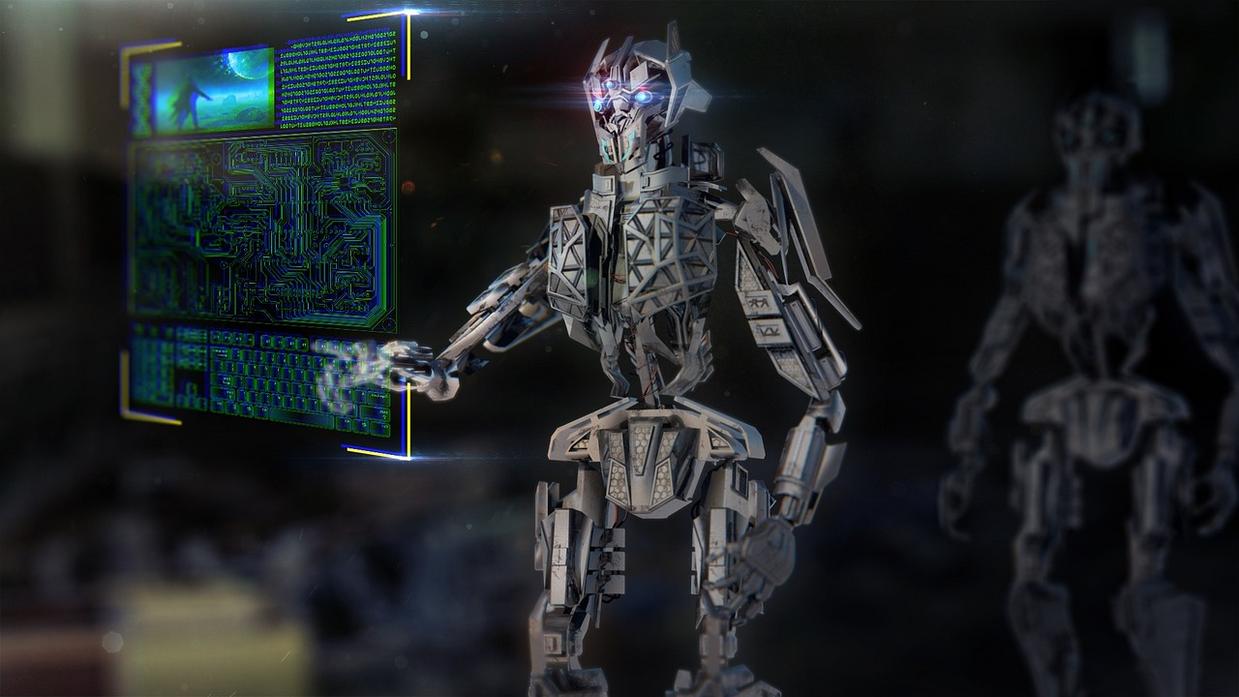
For years, generative AI lived on our screens—writing emails, drafting code, generating art. Now it’s stepping off the monitor and into the factory.
This shift toward Generative Physical AI means systems that don’t just design digitally but simulate, test, and control machines in the real world. Think of it as AI with a body. If ChatGPT writes a manual, embodied AI builds the machine the manual describes.
At a robotics lab in Munich, an engineer recently told me, “We don’t program every motion anymore. We set goals, and the robot figures out the most efficient path.” That’s a radical departure from traditional automation, where every movement required manual scripting.
In advanced manufacturing, robots now:
- Design and simulate their own task sequences
- Test movements in physics engines before touching hardware
- Adjust in real time using sensor feedback
According to McKinsey (2023), AI-driven automation could boost manufacturing productivity by up to 30%—and embodied systems are accelerating that curve. In logistics, fully autonomous warehouses coordinate fleets of mobile robots that reroute dynamically when bottlenecks appear. “It’s like watching ants reorganize after you move the food,” one warehouse manager joked.
Skeptics argue these systems are overhyped and brittle in chaotic environments. Fair point. Physical reality is messy (dust, vibrations, human unpredictability). But improvements in simulation fidelity and reinforcement learning are closing that gap fast—one of the defining emerging technology trends 2026.
The industrial impact is massive: shorter product development cycles, self-optimizing supply chains, and shifting labor demands toward software-mechatronics hybrids.
Maintenance is evolving too. Calibrating these systems now requires fluency in:
- Embedded software
- Sensor fusion
- Mechanical diagnostics
Pro tip: companies investing early in cross-disciplinary training will adapt faster than those treating AI and hardware as separate silos.
The Hybrid Supercomputer: Where Quantum Meets Classical
Pure quantum computers promised a revolution. Then reality hit: fragile qubits, noisy outputs, and error rates that make engineers wince. Enter the hybrid model—a practical middle ground where classical supercomputers and Quantum Processing Units (QPUs) work side by side.
Think of it as GPU acceleration, but for quantum math. A classical system manages data preparation, control logic, and result verification. The QPU tackles narrowly defined, computationally intractable problems—tasks so complex that classical bits would take impractical time to solve.
Classical vs. Hybrid (Side-by-Side):
- Classical-only systems: Reliable, scalable, but slow for molecular simulation or large-number factorization.
- Quantum-only systems: Theoretically powerful, but error-prone and limited in scale.
- Hybrid systems: Stable classical backbone + targeted quantum acceleration (the best of both worlds).
In pharmaceuticals, hybrid setups simulate molecular interactions with higher fidelity, reducing early-stage drug discovery timelines (McKinsey, 2023). In materials science, researchers use QPUs to model electron behavior in next-gen battery compounds, accelerating clean energy R&D (Nature Reviews Physics, 2022). Finance firms are piloting hybrid risk models that compress multi-day Monte Carlo simulations into hours—sometimes minutes (IBM Quantum reports, 2024).
Skeptics argue quantum advantage remains “mostly theoretical.” Fair. But improvements in qubit coherence times, advanced error correction algorithms, and developer-friendly APIs now let non-specialists run quantum routines without a PhD in physics. That accessibility shift defines emerging technology trends 2026.
Pro tip: Organizations experimenting now with hybrid workflows will build institutional expertise before fully fault-tolerant quantum machines arrive (and that head start compounds fast).
Beyond the Flat Screen: Building the Spatial Web
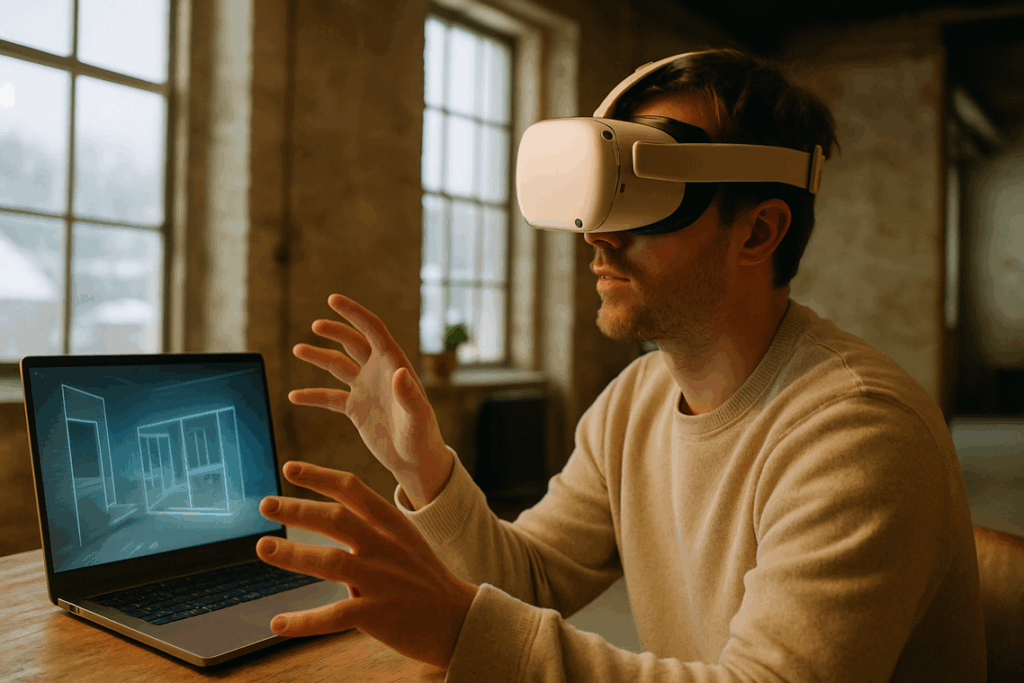
AR and VR are no longer confined to siloed gaming apps or novelty social hangouts. The next phase is a persistent, shared 3D layer over the physical world—often called the Spatial Web (a network of interconnected digital environments anchored to real locations). Instead of launching isolated experiences, users will move through continuous digital spaces layered onto factories, offices, and cities.
The 2026 “killer app” isn’t entertainment—it’s enterprise collaboration. Architects can step inside full-scale digital blueprints from different continents, adjusting materials in real time. Engineers can inspect a jet engine’s digital twin (a real-time virtual replica of a physical object) and simulate stress tests before a single bolt is turned. The benefit is tangible: faster iteration, fewer errors, lower costs.
Skeptics argue video conferencing is “good enough.” But spatial context reduces miscommunication and accelerates decisions (try explaining a 3D airflow issue on a 2D slide deck). That’s why emerging technology trends 2026 consistently highlight immersive workspaces.
Key drivers include lighter AR headsets with advanced environmental sensors, ultra-low-latency 5G and early 6G networks, and standardized 3D formats like OpenUSD, enabling seamless asset portability.
Demand is rising for spatial developers skilled in cross-platform asset management and sensor calibration tutorials. As history shows in how breakthrough innovations move from lab to market, infrastructure maturity turns bold ideas into everyday tools.
The Circuit and the Cell: Merging Biology with Electronics
Flexible, biocompatible electronics are no longer sci‑fi props; they are thin, stretchable systems that interface directly with living tissue. In practice, that means “smart skin” patches tracking glucose or cortisol in real time and intelligent bandages that sense infection, then deliver micro‑stimulation to accelerate healing. So what changed?
Breakthroughs in conductive polymers, graphene-based sensors, and ultra low-power microprocessing quietly solved durability and battery limits. Unlike competitors fixated on implants, the real edge lies in non-invasive design aligned with emerging technology trends 2026—comfortable, affordable, and clinically scalable. This shift changes care dramatically.
Navigating the Next Wave of Innovation
Embodied AI, hybrid computing, the spatial web, and bio-integration are converging into a single, powerful stack. In other words, the real story isn’t each breakthrough alone; it’s how they interlock. A robot guided by cloud-based quantum optimization and overlaid with spatial interfaces isn’t sci-fi—it’s the logical outcome of emerging technology trends 2026.
However, the core challenge now is synthesis. Understanding AI without robotics, or quantum hardware without software, leaves opportunity on the table.
So focus on cross-disciplinary skills. Pair coding with physics, materials science with medicine. The next platform shift will reward the bridge-builders.
What This Means for You in 2026
You came here to understand where innovation is heading and how the next wave of breakthroughs will impact your decisions. Now you have a clearer view of emerging technology trends 2026—from AI-driven automation and quantum acceleration to next-gen robotics and intelligent systems reshaping entire industries.
The real risk isn’t lack of opportunity. It’s falling behind while technology moves forward without you.
Staying informed is no longer optional if you want to remain competitive, adaptable, and future-ready. The insights you’ve gained here position you to anticipate disruption instead of reacting to it.
Now take the next step: subscribe for real-time innovation alerts, explore our in-depth tech breakdowns, and start applying these insights today. Thousands of forward-thinking readers rely on us for cutting-edge analysis and practical tech guidance. Don’t get left behind—join them and stay ahead of the curve.