
The race toward breakthrough energy and advanced technologies is accelerating—and staying informed is no longer optional. If you’re searching for clear, reliable insights into emerging innovations like space-based solar power technology, next-generation AI systems, robotics, or quantum computing, this article is built for you. We break down complex concepts into practical, forward-looking analysis so you can understand not just what’s being developed, but why it matters and how it could shape the future.
Our coverage is grounded in technical research, industry reports, and expert commentary from engineers and technology analysts actively working in these fields. That means you’re getting more than headlines—you’re getting context, feasibility insights, and realistic expectations.
In the sections ahead, you’ll discover the latest innovation alerts, transformative tech concepts, and actionable guidance to help you stay ahead in a rapidly evolving technological landscape.
Powering the Final Frontier
Space is unforgiving: extreme temperature swings, cosmic radiation (high-energy particles that degrade materials), and a vacuum that eliminates conventional cooling. Solar arrays designed for orbit rely on multi-junction photovoltaic cells—stacked semiconductor layers that capture different wavelengths—to push efficiency beyond 30% (NASA). Lightweight deployable panels unfold like origami to maximize surface area while minimizing launch mass.
Critics argue nuclear power is more reliable in deep space. Fair point. Yet solar remains scalable and proven aboard the ISS.
Prediction (speculative): space-based solar power technology could evolve into self-healing arrays using nanomaterials, extending missions decades beyond current limits.
The Workhorse of the Cosmos: Multi-Junction Photovoltaics
Beyond Silicon
On Earth, silicon solar cells dominate rooftops because they’re affordable and reliable. However, space is far less forgiving. Standard silicon cells degrade quickly under intense radiation, extreme temperature swings, and high-energy particles. In orbit, efficiency losses can exceed 20% over a mission lifetime (NASA Materials Engineering Reports). That’s unacceptable when your “extension cord” is 250 miles long.
As a result, engineers turned to multi-junction (MJ) photovoltaics—solar cells built from multiple semiconductor layers designed specifically for harsh environments. Today, they are the industry standard for satellites and deep-space missions.
Layered Efficiency
So how do they work? MJ cells stack different semiconductor materials—commonly Gallium Arsenide (GaAs), Indium Gallium Phosphide, and Germanium—each tuned to absorb a different slice of the solar spectrum. A junction is simply the boundary where two semiconductor materials meet and generate electric current.
Instead of wasting unused wavelengths as heat (a key limitation of single-junction silicon), MJ cells capture more sunlight across multiple bands. The result? Efficiencies exceeding 30%, with some laboratory designs surpassing 40% (National Renewable Energy Laboratory).
Pro tip: Higher efficiency means smaller panels for the same power output—critical when every kilogram launched costs thousands of dollars.
Proven in Action
These cells power the International Space Station, the James Webb Space Telescope, and Martian rovers. In other words, they keep humanity’s most expensive machines alive.
They’re also foundational to space-based solar power technology concepts.
The Manufacturing Challenge
The catch? Manufacturing is complex. Techniques like Metal-Organic Chemical Vapor Deposition (MOCVD) precisely grow ultra-thin crystal layers atom by atom. This precision makes MJ cells durable—and expensive. But when failure isn’t an option, robustness wins every time.
Engineering for Survival: Hardening Arrays Against the Void
Space is not just empty; it is aggressively hostile. Radiation shielding, therefore, is mission-critical. Solar arrays endure constant bombardment from high-energy protons and cosmic rays—charged particles that degrade photovoltaic efficiency over time. To counter this, engineers use cerium-doped coverglass (glass infused with radiation-absorbing materials) and multi-junction cells designed to maintain output even as individual layers degrade. While competitors often mention shielding, few highlight how layered cell redundancy preserves performance margins years beyond projected lifespans.
Equally important is thermal management. Satellites cycle from –180°C in shadow to +150°C in direct sun. Advanced substrates like carbon-fiber-reinforced polymers and optical solar reflectors stabilize expansion and contraction. Without them, microfractures would spread quickly (and silently).
Impact resistance is another underestimated frontier. Micrometeoroids travel faster than bullets. Protection strategies include:
- Thin-film encapsulation layers
- Whipple shielding (sacrificial outer layers that disperse impact energy)
- Flexible cell architectures that localize damage
Structural integrity ties it all together. Launch vibrations and deployment stresses demand lightweight yet rigid honeycomb panels.
As space-based solar power technology scales, resilience becomes the differentiator. For deeper system modeling insights, see digital twins explained building virtual worlds for real systems.
The Next Wave: Innovations Redefining Space Power
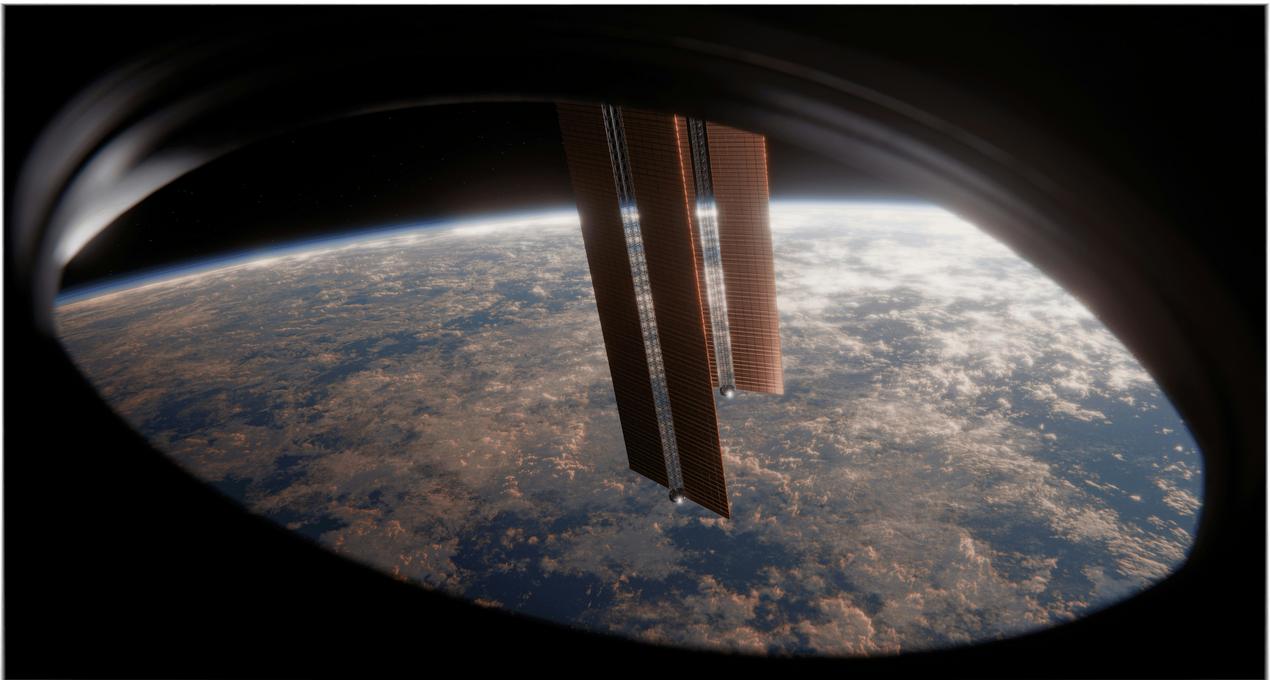
Space power is no longer just about bigger panels—it’s about smarter design. Consider perovskite solar cells versus traditional silicon. Silicon is reliable and well-understood, but it’s heavy and rigid. Perovskites, by contrast, are thin-film materials with a high power-to-weight ratio, meaning they generate more electricity per kilogram launched. That flexibility allows them to bend around curved or deployable structures (think origami, but engineered for orbit). Critics argue durability remains a concern in harsh radiation environments—and they’re right to question it. However, ongoing stability improvements suggest perovskites may soon complement, not replace, silicon arrays.
Next, compare rigid panel arrays with Roll-Out Solar Array (ROSA) systems. Traditional panels fold like an accordion; ROSA unrolls like a steel tape measure. The advantage? Lower launch mass and reduced stowed volume, freeing payload space for instruments or cargo. While some engineers prefer proven hinge-based systems for predictability, ROSA’s flight record—including use on the ISS—shows reliability can coexist with innovation.
Then there’s Concentrator Photovoltaics (CPV). Standard arrays spread sunlight evenly across many cells. CPV systems, instead, use lenses or mirrors to focus sunlight onto smaller, ultra-efficient cells. In high-sunlight orbits, that concentration can shrink array size and potentially cost. The tradeoff is added complexity in thermal control and pointing accuracy.
Finally, Solar Electric Propulsion (SEP) ties it all together. Advanced arrays power ion thrusters, as seen in NASA’s Psyche mission, enabling efficient deep-space travel. As space-based solar power technology evolves, propulsion, generation, and mission design increasingly move as one integrated system.
Future Concepts: From Lunar Grids to Beamed Energy
First, imagine a lunar sunrise stretching sideways across the horizon. Because the Moon’s poles receive sunlight at low angles, engineers are designing vertical solar arrays—tall, wall-like panels that capture grazing light and store it for habitats in permanently shadowed craters. Think The Martian, but colder and with longer nights.
Meanwhile, Space-Based Solar Power (SBSP) pushes ambition further. Massive orbital farms would harvest constant sunlight and transmit it wirelessly, a practical leap for space-based solar power technology. In theory, it’s Tony Stark meets real-world climate goals—bold, expensive, and increasingly plausible. Still, challenges remain.
Powering the Next Frontier
Space is unforgiving, so reliable energy is mission critical. Solar arrays must endure radiation, micrometeoroids, and extreme temperature swings, which is why engineers focus on lighter composites and higher efficiency cells. In practical terms, better panels mean rovers travel farther and habitats recycle air longer. Critics argue nuclear power offers steadier output; however, solar systems scale faster and reduce launch mass. Meanwhile, innovations like foldable arrays and space-based solar power technology promise continuous supply. For planners, the takeaway is clear: prioritize durability testing and modular design to support missions to Mars and beyond. Act early now.
You came here to understand where space-based solar power technology stands today—and what it really means for our energy future. Now you have a clearer view of the breakthroughs, the engineering hurdles, and the massive potential this innovation holds for clean, continuous global power.
The reality is simple: energy demand is rising, climate pressure is mounting, and terrestrial renewables alone may not scale fast enough. That’s the pain point. The opportunity lies above us.
The Next Step Toward an Orbital Energy Future
If you want to stay ahead of the curve, don’t just watch this space—actively track developments, prototype launches, and policy shifts shaping space-based solar power technology. Breakthroughs are accelerating, and early awareness is your advantage.
Get real-time innovation alerts, deep-dive tech analysis, and practical breakdowns trusted by thousands of forward-thinking readers. Don’t get left behind while the future powers up. Subscribe now and stay ahead of the next energy revolution.