

The line between a breakthrough robotics deployment and a multi-million dollar paperweight is a strong assessment. Many fail by using outdated criteria. It’s a problem that’s staring us in the face.
Standard assessment checklists? Obsolete. They don’t touch on future adaptability, integration potential, or collaborative intelligence.
Ever wonder why so many systems flop when they hit the real world? This is why. This article gives you a solution: a full, forward-thinking system for a complete robotics system check.
You need more than a functional system; you need one that’s future-proof.
We dug deep into emerging trends and deployment data. This isn’t just another guide; it’s an important tool for innovators and decision-makers. Ready for a protocol that doesn’t just meet today’s needs but anticipates tomorrow’s?
The Foundational Matrix: Core Performance & Operational Metrics
When it comes to robotics, baseline performance is just the start. You can’t just measure speed and payload. That’s old news.
Instead, to what really matters: looking at these metrics through a futuristic lens.
First off, “Precision & Repeatability” isn’t just about specs. They degrade. Under stress, over time, things change.
Micro-tolerances and sensor drift become your enemies. You’re thinking, “How do I plan for this?” Well, you don’t just rely on advertised numbers. You need real-world testing.
Then there’s “Operational Velocity & Throughput.” It’s not about how fast a system can go in a controlled lab. It’s about executing in chaotic, unpredictable environments. Can your system adapt when everything around it is changing?
That’s the question.
Now, let’s talk about “Energy Consumption & Thermal Dynamics.” Often overlooked, but key. Peak power draw versus idle? That’s going to hit your wallet and your sustainability goals.
Long-term operational costs aren’t just about the initial outlay. They’re about ongoing energy use.
And don’t forget “System Uptime & Mean Time Between Failures (MTBF).” Predictive maintenance is more than a buzzword. It’s the difference between downtime and efficiency. Self-diagnostic functions?
They’re the unsung heroes of next-gen systems.
Pro tip: Always integrate predictive maintenance tools. They’re game-changers.
Lastly, if you’re diving into maintaining complex systems, you might find the Ultimate Guide Maintaining Smart Home Devices useful. It’s not just for homes. The principles apply to any tech.
What you’re really doing in a robotics system check isn’t just checking off boxes. It’s about future-proofing. Can your system evolve with tech advancements?
Because it should. It’s a wild ride, but it’s the only one worth taking.
Unlocking System Brains: Integration & Scalability
When it comes to robotics, the ability to connect and grow within a larger digital space is what sets a system apart. This isn’t just about slapping on some new tech. It’s about ensuring the core system can evolve.
Think of it as a robotics system check for longevity. We all want our investments to last, right?
to the software and API space. Is the SDK/API well-documented? If you’re sifting through pages of jargon, that’s a red flag.
Modern programming languages should be supported. You want an active developer community too. It’s the difference between a thriving space and a ghost town.
The performance assessment system for robotic systems provides a good benchmark for evaluating these factors.
Next up, data architecture and interoperability. How does the system handle data collection and processing? Can it share this data seamlessly?
Compatibility with standard industrial protocols like OPC-UA is key. If your robotics system can’t talk to cloud platforms, you’re missing out on AI and machine learning integrations. And let’s be honest, the future is.
Modularity and future-proofing can’t be ignored. Can you easily upgrade components like grippers and sensors? The system architecture should allow for new tech without a complete overhaul.
This isn’t just about saving money. It’s about staying ahead without constant disruptions.
Introducing digital twin readiness. Can your system be simulated in a virtual environment before deployment? This is a game-changer.
It reduces risk and speeds up innovation, allowing for tweaks and tests before hitting the real world. Think of it like a dress rehearsal for your system.
In a world where tech is constantly evolving, being prepared isn’t enough. You need to be adaptable. That’s the real power of a well-integrated and flexible robotics system.
Robots Unleashed: Human Interaction Redefined
Let’s face it. Robots are no longer behind bars. The real game-changer today is how they interact with us humans.
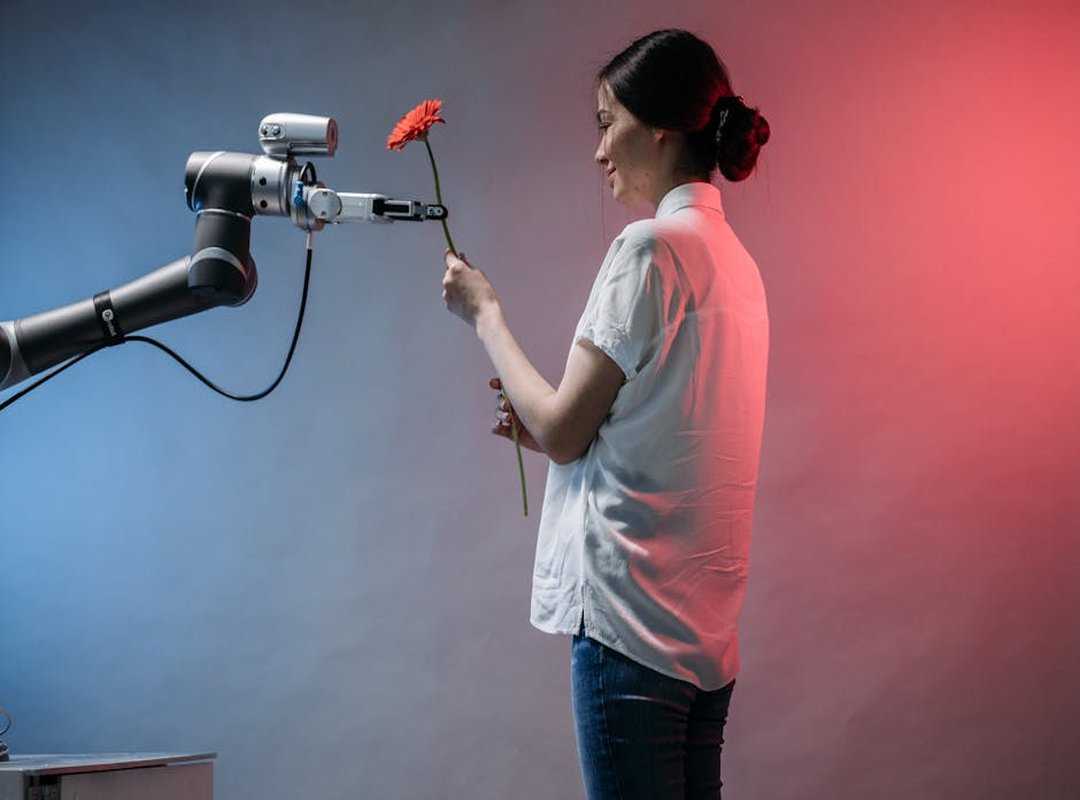
These robots aren’t just reacting to things. They’re actually predicting and avoiding problems. Like, what if your system could anticipate that collision before it even happens? predictive safety protocols come in.
A robotics system check isn’t just about mechanics anymore. It’s about safety, usability, and how well these machines play with us in our own turf. You see it every day.
Now, usability. It’s a buzzword, but it’s more than just a sleek interface. Does anyone else struggle with UIs that look like they were designed in the ’90s?
If the system is intuitive, you don’t need a PhD to program it. Cognitive ergonomics means the system practically thinks for you. The interface needs to be understandable even for non-experts.
No one wants to dig through endless manuals just for a simple task.
What about human-robot collaboration? It’s not sci-fi anymore. The ability for robots to work alongside humans is a massive leap.
Forget about traditional industrial robots. These new bots understand intent, they share tasks. They even take cues from us.
It’s a whole different ballgame. Psychological safety plays into it too. If humans feel uneasy around robots, productivity nosedives.
When a system communicates predictably, workers trust it more. Trust boosts team productivity.
Right now, it’s like living in a sci-fi movie. Check out how Quantum Computer Maintenance Important Tips drive us towards futuristic tech concepts. So, are we ready to truly integrate robots in our lives?
Think about it. It’s not just tech for tech’s sake. It’s about making a workplace that functions but flourishes with human-robot teams.
Are you ready for that level of evolution?
Calculating Future Value: Beyond Immediate ROI
Forget traditional ROI. We need to think long-term for any robotics system check. It’s not just about automating a single task.
We’re talking about elevating your whole operation. This is where the idea of ‘Return on Integration’ comes in. How does your system boost capabilities across the board?
Data is gold. Evaluate the data your robot spits out. Is it unique?
Can it drive process optimization, predictive modeling, or even new services? These aren’t small questions. They’re the big ones that define success.
And let’s not skip ‘Innovation Potential’. How does the system help your team to experiment and innovate? the real value lies. Building a competitive moat isn’t just fancy talk (it’s) a must-do.
If your robotics system doesn’t offer this, you’re missing out. So, challenge yourself. Look beyond the immediate ROI and think about the strategic advantages you can (and should) gain.
Your Path to Smarter Robotics
Let’s face it. A shallow look won’t cut it. A robotics system check must dig deep.
Why? Because without it, you’re throwing money into a pit. This isn’t just about buying fancy gadgets; it’s about making sure your investment pays off long-term.
You need a method that checks all boxes: core metrics, smart integration, human-focused design, and future potential.
Don’t let your operations falter on outdated tech. Use this protocol to benchmark your options. The future of your operation hinges on the intelligence of your assessment today.
Ready to transform your approach? Start now. Your future’s waiting.
 Senior AI & Robotics Analyst
Drusilla Mahoneyanie writes the kind of ai and robotics developments content that people actually send to each other. Not because it's flashy or controversial, but because it's the sort of thing where you read it and immediately think of three people who need to see it. Drusilla has a talent for identifying the questions that a lot of people have but haven't quite figured out how to articulate yet — and then answering them properly.
They covers a lot of ground: AI and Robotics Developments, Strike-Driven Quantum Computing, Innovation Alerts, and plenty of adjacent territory that doesn't always get treated with the same seriousness. The consistency across all of it is a certain kind of respect for the reader. Drusilla doesn't assume people are stupid, and they doesn't assume they know everything either. They writes for someone who is genuinely trying to figure something out — because that's usually who's actually reading. That assumption shapes everything from how they structures an explanation to how much background they includes before getting to the point.
Beyond the practical stuff, there's something in Drusilla's writing that reflects a real investment in the subject — not performed enthusiasm, but the kind of sustained interest that produces insight over time. They has been paying attention to ai and robotics developments long enough that they notices things a more casual observer would miss. That depth shows up in the work in ways that are hard to fake.